Before the paper
Corn, and a ford
It is believed that a corn mill existed at Stowford in the parish of Harford as early as the 13th century, although records from that time are sparse. In the 16th century, within the manor of Ivybridge, it is documented that Humfrey Bonville, lord of the manor, leased properties to William Cannycote and Henry Withycombe for the purpose of grinding corn. These leases are the earliest known references to the Ivybridge corn mills.
At Stowford, named for a ford crossing, records of a mill resurface in the 18th century with a grist mill documented in 1713. Later, a flour mill was recorded under the occupation of William Saunders, among others, before the property was eventually needed for the expansion of the neighbouring paper mill.

1787 to 2013
Two hundred and twenty six years of paper
Stowford Mill in Ivybridge started paper making in the late eighteenth century, using a mechanical process for rags. Established by William Dunsterville in 1787, it changed hands through Henry Rivers and Francis Fincher, who bought it in 1816. The mill employed pre-mechanisation hand-made paper methods, faced bankruptcy in 1834, and expanded significantly in the 1860s under the Allen family, including new paper machines in 1862.
The railway's arrival in 1848, the major fire in 1914, and various ownerships, including sales to Messrs. Portals of Laverstoke in 1924 and Wiggins Teape in 1930, marked its progress. Celebrating its bicentenary in 1987, modernising in the 1980s, and closing in 2013 after 226 years, the mill donated a dandy roll to the Ivybridge Heritage and Archives Group.
Paper making at Stowford Mill
Stowford Paper Mills began producing watermarked paper, including Azure Laid paper, in 1843. A ream typically contained 480 sheets, with cassie quires protecting the quality sheets. Watermarked paper from this period has been found as far away as Hong Kong and Brooklyn.
John Allen, who acquired the mill in 1849, introduced new machines, tub-sized and esparto grass paper, and Fine and Superfine Vellum, achieving an annual output of 2,000 tonnes. His contributions, along with those of his sons, included significant rebuilding in 1862. Excise duty could be recovered through the watermarks. James Thomson stocked their paper. Various owners, including Messrs. Portals and Wiggins Teape, managed the mill, which celebrated its bicentenary in 1987 and closed in 2013, producing John Allen Superfine watermarks to the end.
The great fire of 1914
On 5 May 1914, a fire at Stowford Mill, originating in the turbine engine, engulfed the main building. Local residents and workers watched as the smoke billowed. The Clapperton Syndicate had stabilised trade since 1910. Harford Road was barricaded, and multiple fire brigades, including Ivybridge and Stonehouse, responded. Stowford Lodge housed the Devon School of Gardening at the time. The launder supplied water, and volunteers assisted.
Despite extensive damage, community support and insurance enabled restoration, including saving the new engine house. A stoker exemption in 1916 and workforce conscription affected operations. Safety measures such as a sprinkler system were added, and a Fire Relief Fund aided the workers.
Timeline
Key events
- 13th century
Believed existence of a corn mill at Stowford in the parish of Harford.
- 16th century
Within the manor of Ivybridge, Humfrey Bonville leases properties to William Cannycote and Henry Withycombe for grinding corn.
- 1713
A grist mill is recorded at Stowford.
- 1787
William Dunsterville purchases the lease for Stowford Barton to establish a paper mill adjacent to an existing corn mill and leat.
- 1797
William Dunsterville dies, and Henry Rivers acquires the Stowford Estate, leasing it to Francis Fincher.
- 1816
Francis Fincher purchases Stowford Mill.
- 1824
Business passes to Francis Fincher's sons, William and Francis Fincher.
- 1834
Fincher and Sons file for bankruptcy.
- 1839
William Ackland acquires Stowford Mill.
- 1840
Richard Kingwell, an experienced papermaker, takes over as lessee but dies shortly after.
- 1843
Stowford Mill produces its first watermarked paper.
- 1849
John Allen purchases Stowford Paper Mill.
- 1862
Major expansion and modernisation by John Allen, including new rag boilers, breakers and beaters.
- 1869
A Western Morning News article gives a detailed description of the mill's operations and workforce.
- 1877
John Allen dies; his sons Edward and John take over the business.
- 1910
The Allen family sells the mill to the Clapperton Syndicate.
- 1914
A major fire devastates the main building on 5 May, halting production for almost a year.
- 1924
The mill is sold to Messrs. Portals of Laverstoke and renamed Portals (John Allen and Sons) Ltd.
- 1930
Portals sell Stowford Mill to Wiggins Teape (1919) Limited.
- 1954
Stowford Mill switches from coal to oil fuel, eliminating smoke pollution.
- 1980
A new combined heat and power plant is commissioned, marking significant capital investment.
- 1987
Stowford Mill celebrates its bicentenary with a special paper production.
- 1991
Wiggins Teape merges with Arjomari Prioux, refocusing on the security paper market.
- 2012
Announcement of Stowford Mill's closure due to a decline in business.
- 2013
The last reel of paper is produced on 21 November, ending 226 years of paper manufacturing.
- 2014
Final employees oversee the decommissioning of the site.
- 2024
The residents' association is formed.
And now
We live here now
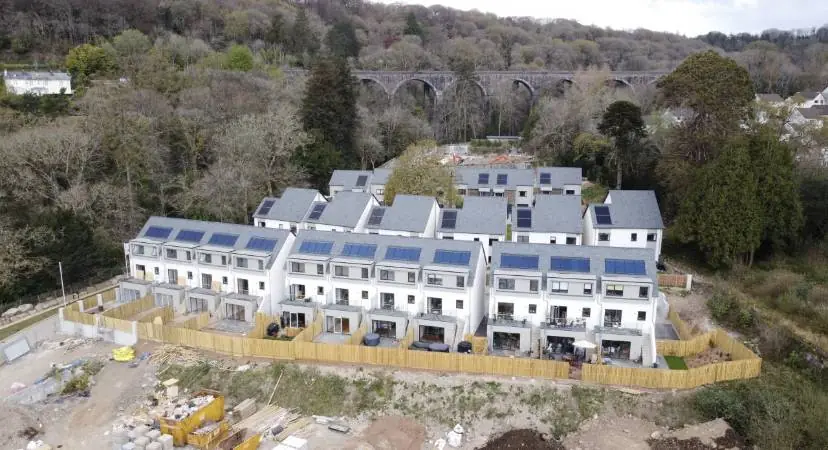
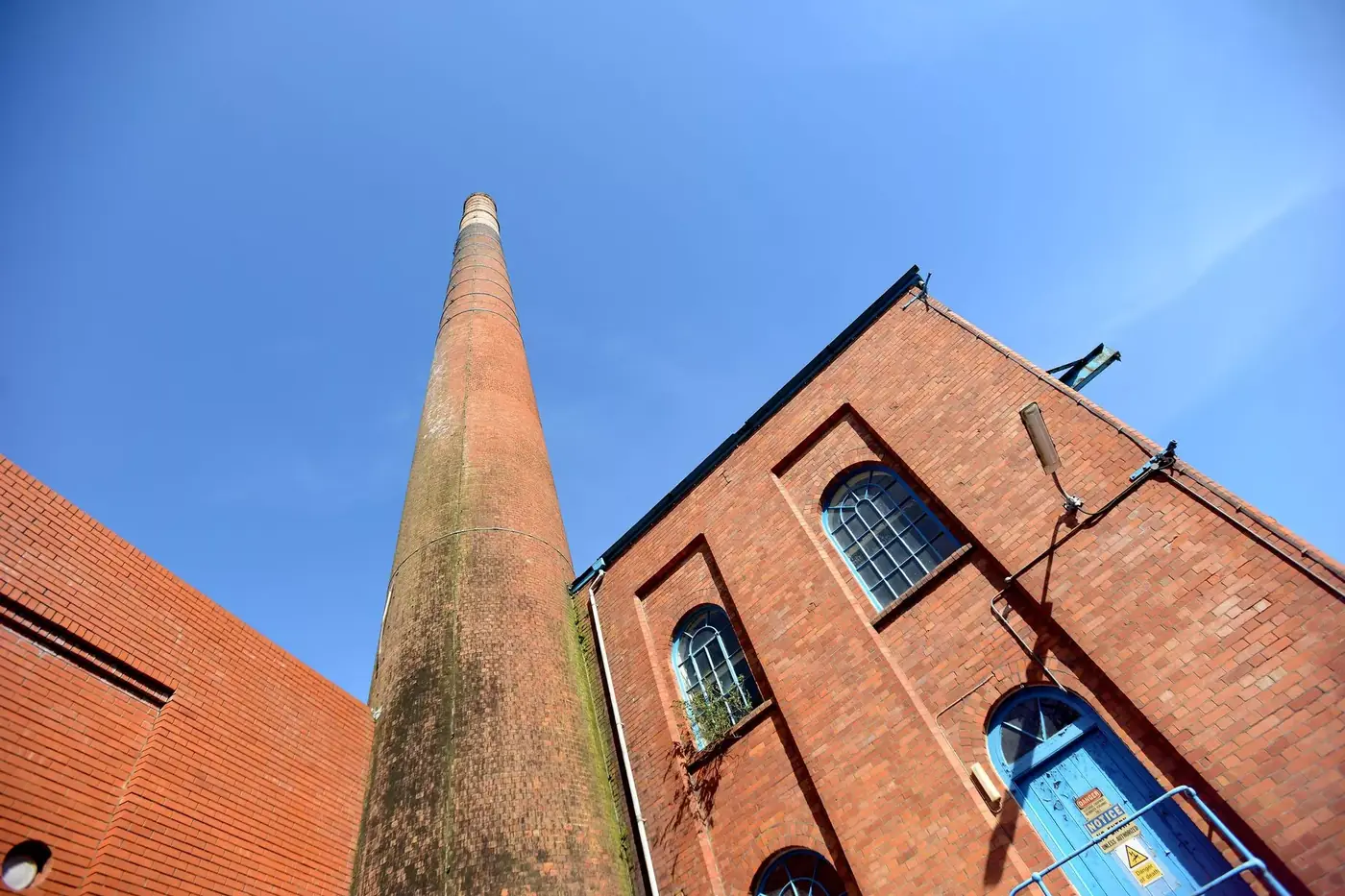
The houses at Stowford Mill sit on the site of the paper works, between the Erme and the viaduct. What survives of the mill sits alongside them.
The Ivybridge Heritage and Archives Group holds the mill's records, its photographs and film, and the dandy roll donated when the mill closed. We are grateful for their work, on which this page depends.